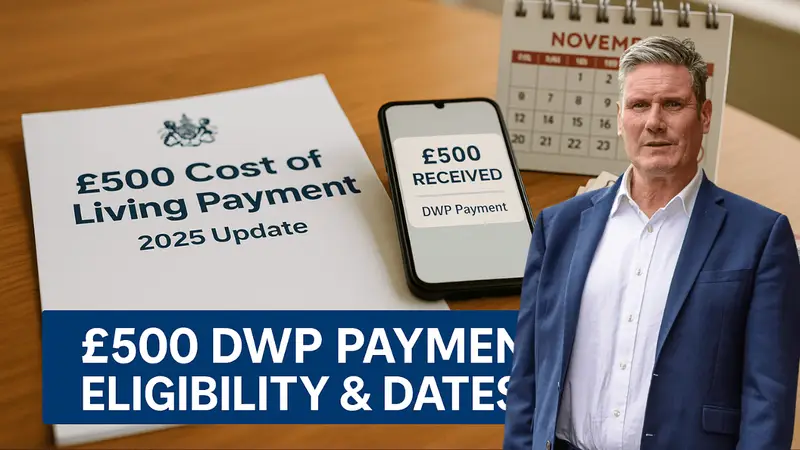
The rising cost of everyday essentials has continued to put pressure on households across the UK. From energy bills and food prices to rent and transport costs, many families are still finding it difficult to manage monthly expenses. To provide relief, the UK government, through the Department for Work and Pensions (DWP), has announced a £500 Cost of Living Payment for 2025. This support is aimed at helping low-income households cope with ongoing financial challenges.
This article explains what the £500 Cost of Living Payment is, who is eligible, when it is expected to be paid, and how it could help millions of people across the UK.
What Is the £500 Cost of Living Payment 2025
The £500 Cost of Living Payment is a one-off financial support measure introduced to help vulnerable and low-income households manage rising living costs. It is part of a wider government effort to provide targeted help rather than across-the-board tax cuts or universal payments.
Unlike loans or advances, this payment does not need to be repaid. It is designed to offer direct financial relief for essential expenses such as food, heating, electricity, rent, and other household costs. For many families, this payment could help bridge the gap during periods of high inflation and economic uncertainty.
Why the Government Is Offering This Payment
Although inflation has eased slightly compared to previous years, the cost of living in the UK remains high. Energy prices are still unpredictable, food costs remain above pre-pandemic levels, and housing expenses continue to rise in many areas.
The government has recognised that certain groups are more affected than others, especially those relying on benefits or fixed incomes. The £500 Cost of Living Payment is intended to support people who are most at risk of financial hardship, ensuring they can meet basic needs without falling into debt.
Who Is Eligible for the £500 Cost of Living Payment
Eligibility for the £500 payment is expected to be based on whether a person receives certain income-related benefits during a qualifying period set by the DWP. The payment is not universal and will only go to those who meet specific criteria.
You may be eligible if you receive one or more of the following benefits:
- Universal Credit
- Pension Credit
- Income-based Jobseeker’s Allowance (JSA)
- Income-related Employment and Support Allowance (ESA)
- Income Support
- Working Tax Credit
- Child Tax Credit
In most cases, eligibility depends on receiving at least one qualifying payment during a specific assessment window. People receiving contribution-based benefits only may not qualify unless they also receive an income-related benefit.
Pensioners and the £500 Payment
Pensioners are among the groups most affected by rising living costs, particularly energy bills. Those who receive Pension Credit are expected to be eligible for the £500 Cost of Living Payment.
Pensioners who do not currently receive Pension Credit but may be eligible are encouraged to check and apply. Pension Credit not only increases weekly income but can also unlock access to additional financial support, including cost of living payments and help with housing and council tax.
Payment Dates and When to Expect the Money
While exact payment dates are usually confirmed closer to the time, the £500 Cost of Living Payment for 2025 is expected to be issued in stages rather than as a single nationwide payment day.
Based on previous support schemes, payments are likely to be made automatically between spring and summer 2025. Eligible recipients will not need to apply, as the DWP will use existing benefit records to identify who qualifies.
Once payments begin, the money should appear directly in the recipient’s bank account, using the same details already held by the DWP or HMRC.
Do You Need to Apply for the Payment
No application is expected to be required for the £500 Cost of Living Payment. If you are eligible, the payment should be made automatically.
However, it is important to ensure that your benefit claim is active and up to date during the qualifying period. Any delays, missed assessments, or closed claims could affect eligibility. Keeping your personal details, including bank information, accurate is also essential to avoid payment issues.
Will the £500 Payment Affect Other Benefits
The £500 Cost of Living Payment is expected to be tax-free and will not count as income for benefit calculations. This means it should not affect your entitlement to other benefits or reduce the amount you receive from Universal Credit, Pension Credit, or other support schemes.
This approach ensures that households receive the full benefit of the payment without unintended financial consequences.
How the Payment Can Be Used
There are no restrictions on how the £500 Cost of Living Payment can be spent. It is up to each household to decide how best to use the money based on their needs.
Many recipients are likely to use the payment to cover essential costs such as:
- Energy and heating bills
- Food and groceries
- Rent or mortgage payments
- Council tax
- Transport costs
- Unexpected household expenses
For families under financial pressure, this payment could help reduce stress and provide breathing room during difficult months.
How This Payment Compares to Previous Support
In recent years, the UK government has introduced several cost of living payments to support households during periods of high inflation. The £500 payment for 2025 is one of the largest single support amounts announced so far.
Earlier payments were often split into smaller instalments across the year. A £500 payment provides more flexibility, allowing households to manage larger expenses or build a small financial buffer.
What to Do If You Do Not Receive the Payment
If you believe you are eligible but do not receive the £500 Cost of Living Payment within the announced timeframe, there are steps you can take.
First, check whether you received a qualifying benefit during the relevant assessment period. If you did, review your bank account details and ensure there are no issues with your claim.
If everything appears correct, you can contact the DWP or HMRC for guidance. It is usually advised to wait until the full payment window has passed before raising a query, as payments are often staggered.
Protecting Yourself from Scams
Whenever cost of living payments are announced, scammers often try to take advantage of the situation. The DWP will never ask for personal information, bank details, or payment fees via text messages, emails, or phone calls.
Official payments are made automatically, and there is no need to click links or respond to unsolicited messages. If you receive suspicious communications, it is important to ignore them and report them through official channels.
Final Thoughts on the £500 Cost of Living Payment 2025
The £500 Cost of Living Payment for 2025 is a significant step aimed at supporting those most affected by ongoing financial pressures in the UK. For eligible households, this payment could provide much-needed relief and help cover essential expenses during a challenging economic period.
While it is not a long-term solution to rising living costs, it offers immediate support and reassurance to millions of people. Staying informed, ensuring benefit claims are up to date, and being cautious of scams will help ensure eligible individuals receive the support they are entitled to.
As further details are confirmed by the DWP, it is worth keeping an eye on official announcements to stay updated on exact dates and eligibility rules. For now, the £500 Cost of Living Payment represents welcome support for UK households in 2025.