Across the UK, any news linked to Personal Independence Payment (PIP) instantly gets attention, because for many disabled people it is not “extra money”, it is the financial support that helps them live with dignity. From transport and mobility costs to help with everyday activities, PIP is a key benefit that thousands of households rely on every month.
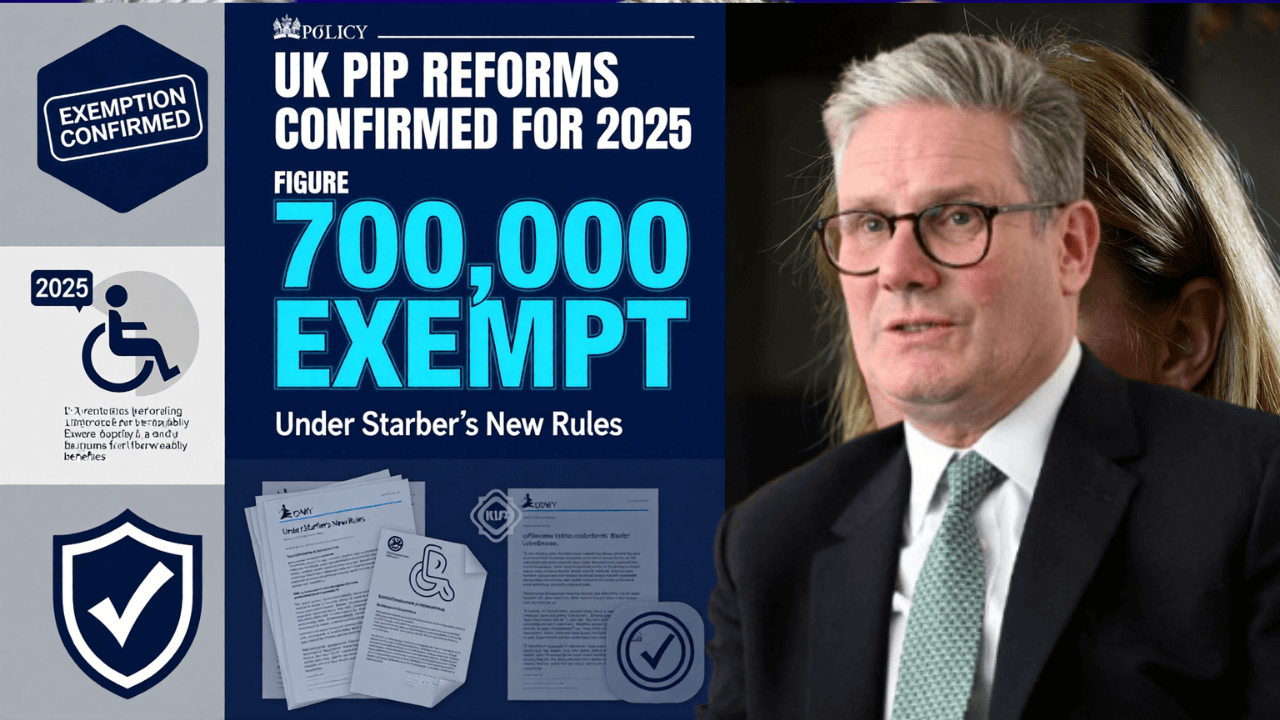
That is why headlines claiming “UK PIP Disability Benefits Reforms 2026” and stating that “700,000 people are exempt under Starmer’s new rules” have started spreading widely. Many claimants are now asking the same questions: what reforms are being discussed, what does “exempt” actually mean, and does this change anything for people already receiving PIP?
The truth is, whenever reforms are mentioned, the first thing people worry about is losing their payments. But in most cases, benefit reform announcements do not mean an immediate stop to support for everyone. Usually, reforms are phased in gradually, and exemptions often exist to protect certain groups from being affected straight away.
This article explains what PIP reforms in 2026 could realistically involve, what an exemption figure like 700,000 might refer to, who may be protected, and what claimants should watch for without panicking.
Why PIP reform headlines spread so quickly
PIP is one of the most talked‑about benefits in the UK because it is awarded based on disability needs, not income. That makes it different from many other benefits. A person can be in work and still qualify if their daily living and mobility needs meet the criteria.
When a headline claims reforms are coming, people naturally worry they will be reassessed, forced into new tests, or pushed out of eligibility. The fear comes from how stressful the assessment system already feels for many claimants, especially those who live with long‑term health conditions, mental health difficulties, or fluctuating disabilities.
On top of that, when a headline includes a number like 700,000 exempt, it sounds very official. People assume a major rule change has already been confirmed. But numbers like this often appear in news discussions as estimates, planning figures, or policy targets, rather than a simple “everyone gets treated the same” update.
What PIP is and why it matters so much in daily life
PIP is designed to help with the extra costs of disability, whether those costs are physical, mental, or both. It is not based on income or savings, which is why many claimants receiving PIP are also working, studying, or living independently.
PIP usually includes two parts, the Daily Living component and the Mobility component. Depending on how a claimant is assessed, they may qualify for a standard or enhanced rate. These payments can make a real difference because disability often creates costs that other people do not experience, such as taxis instead of buses, special equipment, home support, extra heating, or needing help with cooking and daily tasks.
For many people, PIP is also connected to other support. It can influence eligibility for schemes such as Motability, Blue Badge access in some situations, carer support, and other disability‑related help. This is why any reform discussion makes people feel they are not just risking one payment, but a wider safety net.
What “PIP disability benefit reforms” usually means
When reforms to PIP are discussed, they generally fall into a few broad categories. Sometimes reforms are about the assessment process itself. That could mean changes to how evidence is used, how decisions are made, or whether face‑to‑face assessments become more common or less common.
Other times, reforms are about eligibility thresholds. That means the government may want to tighten the rules for certain activities or adjust how points are given for specific conditions. This is where many people become most concerned, because a small scoring change can decide whether someone qualifies at all.
Reforms can also relate to reassessment frequency. Some claimants already receive longer awards, while others are called for review more often. If the government changes how often people are reassessed, it could affect stress levels and stability even if the payment rates remain the same.
The key thing to remember is that reforms are not always about reducing support. Sometimes they are presented as improving the system, reducing fraud, or making decisions quicker. But even “improvement” reforms can create worry because any change brings uncertainty.
Why Starmer’s name is being linked to the rules
Many PIP reform headlines now use the name of Labour leader Keir Starmer, because disability benefits have become part of wider political debate about welfare spending, fairness, and government efficiency.
When a new government or leadership direction is discussed, people often assume changes will be immediate and large. But in reality, benefit systems like PIP involve complex processes, existing contracts, and legal frameworks. Even if reforms are planned, they usually require consultations, formal proposals, and time to implement.
This is why people should be cautious about the language used in viral headlines. Phrases such as “Starmer’s new rules” can be used as a shortcut in news coverage, even when policies are still under discussion or not yet fully detailed for public rollout.
What does “700,000 exempt” actually mean
The word exempt sounds reassuring, but it can also be confusing. In benefits policy, “exempt” usually means a group of claimants will not be affected by a new rule immediately, or they are protected from certain parts of a new system.
A number like 700,000 exempt could refer to people in specific categories, such as those with severe or long‑term conditions, those already on certain award types, or people who meet specific vulnerability criteria.
It may also refer to a group that the government plans to keep under a different assessment process, meaning they would not need to go through new reassessment rules. Sometimes exemption numbers are attached to claimants who are already receiving the highest levels of support, where policymakers argue that those people should not face extra burden or repeat checks.
However, exemption does not always mean permanent protection. In some policy changes, exemptions apply only during a transition period, meaning a person may still face the new system later.
Why exemption numbers don’t automatically mean everyone else loses out
When people see “700,000 exempt,” the next worry is usually, “What about the rest?” Many assume everyone else will lose entitlement or see cuts.
But benefit reforms do not always work like that. Sometimes exemptions exist simply because governments cannot process millions of reassessments quickly. They focus reforms on new claimants first, or on a smaller group of cases that fit certain criteria.
In other cases, exemptions are designed to protect people with the most severe needs, while reforms focus on tightening rules for borderline cases or reducing repeat reassessments for those with clear long‑term disabilities.
That does not mean the system becomes perfect, but it does mean that exemption figures should not automatically be interpreted as a sign of widespread benefit removal.
Who is most likely to be protected under exemptions
Although the exact exemption rules depend on what is officially confirmed, exemptions in disability systems often protect people who have the least ability to cope with added stress, paperwork, or repeated reassessments.
This typically includes people with long‑term health conditions where improvement is unlikely, those with severe mobility restrictions, and people with significant daily support needs. It can also include claimants in ongoing care situations or those who meet high support thresholds.
Exemptions can also apply to people already receiving high awards, because governments often focus reviews on cases where they believe outcomes may change. Claimants with strong medical evidence and long‑term needs may be seen as lower priority for reassessment.
What might change for PIP claimants in 2026
If reforms are introduced in 2026, claimants may notice changes in how the system operates rather than sudden changes to payment amounts. This could involve changes in evidence requests, changes to the assessment structure, or new emphasis on certain activities.
Some people might notice that decisions take longer or shorter depending on how processes are updated. Others may find the review process becomes more structured or more reliant on medical information.
In some reform systems, governments also adjust how they handle “paper‑based reviews,” where claimants do not need a face‑to‑face assessment because evidence is strong enough. If that expands, it could reduce stress for many people.
But reforms can also bring new pressure if they increase reassessment activity or introduce stricter approaches to awarding points in certain categories.
Will PIP payments stop for current claimants
Most PIP claimants will not see their payments suddenly stop just because reforms are discussed. PIP is awarded for a set period, and payments continue during that award unless there is a specific reassessment decision.
That said, changes can still affect people over time, particularly when their review date arrives. This is why claimants often feel anxious even when reforms are not immediate.
If a person is on a long award and is described as exempt, they may face less disruption. But if they are on a shorter award, they may feel more pressure because their review could happen sooner.
Why reassessments are often the biggest fear
Most people are not worried about PIP existing. They are worried about having to prove their condition again and again. PIP assessments can feel intense, particularly for claimants with anxiety, depression, PTSD, or hidden disabilities.
Reforms that change how reassessments work can create extra stress even if payment levels stay the same. A system may become more strict in how it interprets evidence, or it may ask for different types of proof.
This is one reason why exemption rules matter. If exemptions reduce reassessments for certain groups, it can protect claimants from repeated stress and uncertainty.
What claimants should do right now
The most important thing claimants can do is not panic based on headlines alone. Instead, they should focus on keeping their claim stable and protecting themselves with good records.
That includes keeping copies of medical evidence, letters, prescriptions, treatment notes, and anything that shows how the condition affects daily living. It also includes keeping a record of difficult days, especially for conditions that fluctuate, because those are often harder to explain in assessments.
Claimants should also check their award end date so they know when a review might occur. Knowing the timeline helps reduce surprise and allows time to gather evidence if needed.
Why it is important to avoid misinformation and rumours
Benefit rumours spread quickly online because people want hope and reassurance, and fear spreads even faster than hope. Some websites use dramatic language to attract clicks, and some social media posts repeat claims without verifying details.
In reality, policy changes are rarely as simple as one headline suggests. Reforms may apply only to new claims, or only to certain categories of claimants, or may be phased in over several years.
This is why claimants should rely on official updates and not assume that every viral post is accurate. If someone is worried, checking official communications and trusted advice sources is always safer.
How to protect yourself from scams linked to benefit changes
When benefit reform stories trend, scams increase. Fraudsters know people are anxious and may act quickly without thinking. They may send messages pretending to be from DWP, asking for personal details or bank information.
A genuine DWP payment does not usually require a claimant to click random links or pay a fee. Claimants should be cautious about any unexpected text or email claiming urgent action is required.
If something feels suspicious, it is safer to ignore it and check through official routes than respond immediately.
Key points to remember
PIP reform discussions in 2026 do not automatically mean payments are stopping for everyone. Any exemption figure like 700,000 suggests that a large group may be protected from certain changes, at least in the early stages.
Most reforms are phased in gradually and often focus on assessment procedures, eligibility interpretation, and review systems. Claimants should focus on staying organised, keeping evidence, and avoiding panic caused by exaggerated headlines.
The most important thing is to understand that disability support in the UK does not usually change overnight. When reforms happen, they are typically introduced step by step.
Final thoughts
For disabled people and their families, PIP is not a small issue. It affects daily life, independence, and financial stability. That is why any talk of reform creates genuine anxiety.
But while the headline “700,000 exempt” may sound dramatic, it can also be a sign that policymakers recognise the need to protect vulnerable claimants from disruption. If reforms do come in 2026, the real impact will depend on the fine detail, who qualifies for protection, and how the DWP applies the rules in practice.
For now, claimants should focus on what they can control: staying informed through trusted sources, keeping their evidence updated, and remembering that not every headline equals an immediate change to payments.